

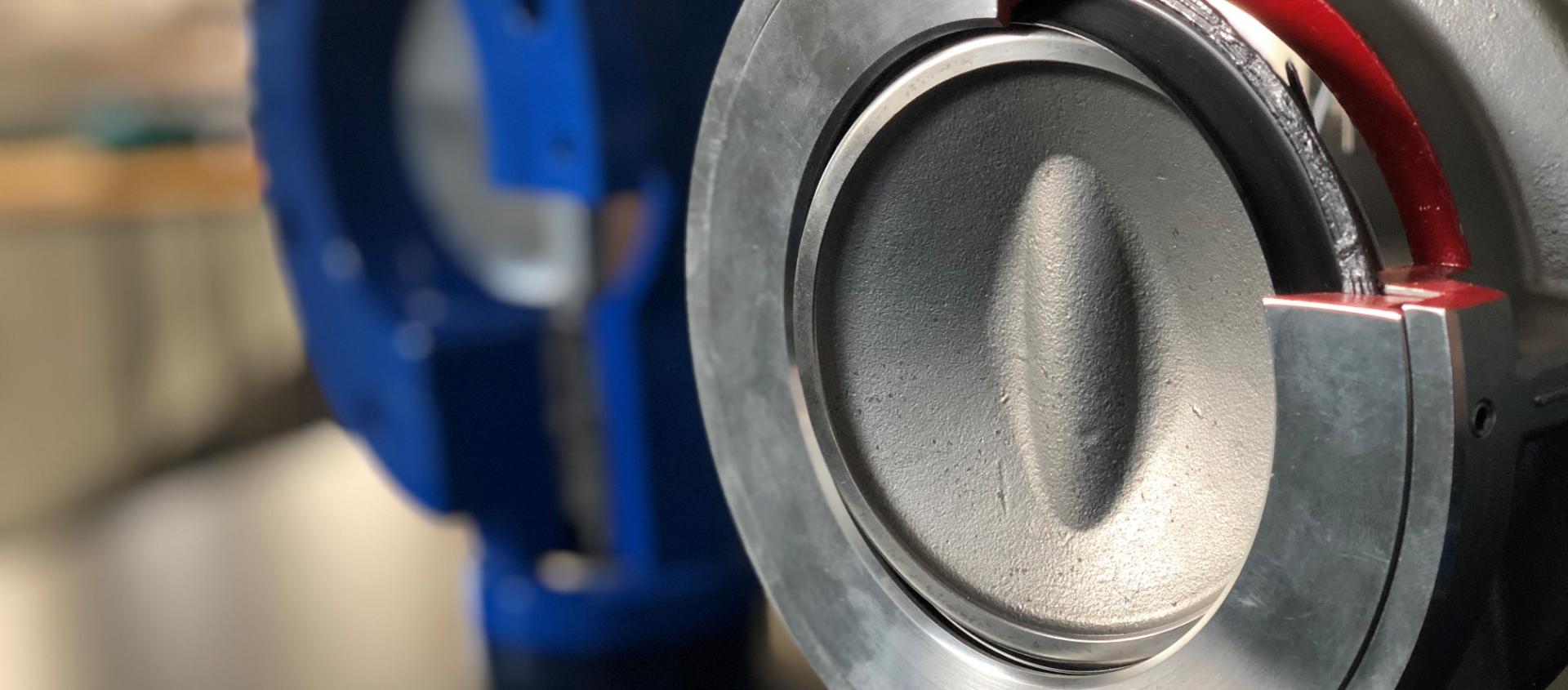
Butterfly Valves
Butterfly valves are a compact and reliable solution for isolation in many types of systems. They are used for water, HVAC, chemical, gas and sanitary processes, and are available in several designs depending on requirements for tightness, temperature, pressure, materials and operation. At Fagerberg we offer concentric, high performance, triple eccentric and sanitary butterfly valves for various industries and applications.
.png&AlternativeImage=%2fFiles%2fImages%2fNewLogoBlue.svg "Butterfly valves - Order online - For all industries")
What is a butterfly valve?
A butterfly valve opens and closes the flow by means of a rotating disc – also called a flapper – inside the valve. The design makes it a compact choice when low weight, simple operation and effective shut-off are required.
The valve type is used in many different installations and is often suitable when space constraints are a consideration, or when the dimensions are larger than DN50 / 2". It can be applied to both general industrial applications and more demanding processes, depending on design, sealing and material selection.
Depending on the application, the solution can be supplied as soft sealing, high performance or metal sealing design. This makes it possible to choose a model that suits both the medium, pressure, temperature, sealing requirements and operating environment.
Benefits of butterfly valves
Butterfly valves are often chosen because they combine simple design with good function in many types of systems. They are particularly relevant where a compact shut-off solution is desired, which is easy to operate and can be adapted to different media and operating conditions.
Typical benefits include:
- compact design and low weight
- simple manual or automated operation
- suitable for both general industrial applications and more demanding operation
- several design principles depending on tightness requirements and media
- possibility of 0% leak rate with selected rubber-lined valves
At Fagerberg our range spans from all-purpose rubber-lined solutions, which are typically used up to 16 bar, to concentric, double eccentric and triple eccentric models for more demanding applications. We also offer sanitary solutions for food and pharma, where hygienic design, materials and surfaces play a central role.
Working with steam, hygienic processes or regulation? See also our seat valves and sanitary process components.
.png&AlternativeImage=%2fFiles%2fImages%2fNewLogoBlue.svg "Butterfly valves - Order online - For all industries")
.png&AlternativeImage=%2fFiles%2fImages%2fNewLogoBlue.svg "Butterfly valves - Order online - For all industries")
Medium
Start by considering which medium the valve should be used for. There is a difference between water, drinking water, HVAC, chemical, gas, aggressive media and sanitary processes.
In our range you will find, amongst other things, solutions for water, drinking water, HVAC and chemical, gas-approved models as well as sanitary designs for food and pharma.
Temperature and pressure
Some models are well suited to general applications at lower pressures, whilst others are developed for more demanding conditions.
Rubber-lined solutions such as GEFA K11 are typically used as an all-round choice for applications up to 16 bar. GEFA KG2/KG4 are relevant for applications below 10 bar, whilst GEFA KG6/8/16/18 can be used for aggressive media at temperatures up to 200 °C.
Sealing requirements
Sealing requirements are often decisive for the choice of valve principle. TTV Concentric is a soft-sealing solution with tight closure in both directions, whilst Zwick Triple TRI-CON D1 is a metal-sealing model with 100 % sealing, class A / zero leakage.
In systems where leakage, safety or process stability is critical, sealing class and sealing principle should therefore always be assessed early in the selection.
Valve Principle
There are several design principles that suit different operating conditions.
Concentric valves are often used for general applications where a simple and reliable solution is desired. Double eccentric models may be relevant when higher demands are placed on wear, torque and service life. Triple eccentric solutions are typically chosen for demanding process conditions where high sealing, low friction and long service life are important parameters.
Materials and Approvals
In some systems, material selection, coating and approvals are critical. GEFA KG6/8/16/18 is used, for example, with PTFE coating for aggressive media. GEFA KG2/4 is used for gas applications due to DVGW approval, and NAF Torex can be supplied with approvals in accordance with EN ISO 15848-1 and ATEX.
In hygienic processes, materials and surfaces are equally important. Here, Kieselmann solutions may be relevant because they are developed for food and pharma with media-contacting parts in 304L or 316L and electropolished surfaces.
Operation and Automation
Butterfly valves can be used both manually and with actuators. This is relevant when the valve is to be integrated into an automated system, remotely controlled or operated frequently.
Across the range there are solutions for both simple shut-off and more demanding modulating operation. The choice depends, amongst other things, on torque requirements, process control, frequency of operation and need for feedback to the system's control system.
.png&AlternativeImage=%2fFiles%2fImages%2fNewLogoBlue.svg "Butterfly valves - Order online - For all industries")
Solutions for different industries
Butterfly valves are used in many industries, but the requirements vary from facility to facility.

Water, drinking water, HVAC and general industry
For water, drinking water, HVAC, cooling and general industry, this valve type is often chosen due to its compact design, simple operation and broad applicability. TTV Concentric is an example of a solution that can be used for water, drinking water, HVAC, cooling and chemicals.
Gas
For gas applications, approvals can be decisive. Here, valves with relevant gas approvals are used, for example DVGW approval. GEFA KG2/4 is an example of a model that may be relevant in this type of installation.
Chemicals and aggressive media
With aggressive media, material selection and coating are important parameters. We recommend, amongst others, GEFA KG6/8/16/18, which with PTFE coating is well suited for demanding chemical environments and media that place special demands on resistance.
Demanding process industry
In process industry, where focus is on low torque, high sealing and long service life, high performance or triple eccentric solutions may be relevant. TTV Colossus, Zwick Triple TRI-CON D1 and NAF Torex are examples of models for more demanding operation.
Food, pharma and sanitary processes
In sanitary applications, design, surface roughness and materials are central. Kieselmann butterfly valves are developed for food and pharma and are supplied with media-contacting parts in 304L or 316L and electropolished surfaces.
This makes them relevant in processes where cleanable design, hygiene and material documentation are important parts of valve selection. See our other sanitary process components here.
Should we help you choose the right solution?
Do you need help selecting the right butterfly valve for your system? Our specialists will assist you in assessing media, pressure, temperature, sealing requirements, materials and operation, so you get a solution that fits both your operation and installation.
FAQ on butterfly valves
When do you choose a butterfly valve?
You typically choose a butterfly valve when you need a compact shut-off solution with low weight, simple operation and broad applicability. The choice depends amongst other things on the medium, pressure, temperature, sealing requirements, materials and whether the valve should be operated manually or automated. See other shut-off solutions here.
What is the difference between concentric, double eccentric and triple eccentric butterfly valve?
Concentric models are often used for general applications where a simple and robust solution is desired. Double eccentric valves are typically chosen when there are higher requirements for torque, wear and service life. Triple eccentric solutions are used in more demanding process plants where sealing, low friction and operational reliability are key requirements.
Can butterfly valves be used for sanitary applications?
Yes. Butterfly valves are also available in sanitary versions for food and pharma applications amongst others. Here, materials, surfaces and cleaning-friendly design are crucial. Kieselmann solutions are developed for hygienic processes and can be supplied with media-contacting parts in 304L or 316L as well as electropolished surfaces.
Can butterfly valves be automated?
Yes. They can be operated manually or automated with an actuator. Automation is relevant when the valve needs to be remotely controlled, integrated into a process plant or operated frequently. The choice depends amongst other things on torque requirements, control needs, type of operation and feedback requirements.
.png&AlternativeImage=%2fFiles%2fImages%2fNewLogoBlue.svg "Butterfly valves - Order online - For all industries")
.png&AlternativeImage=%2fFiles%2fImages%2fNewLogoBlue.svg "Butterfly valves - Order online - For all industries")
How to maintain a butterfly valve?
Maintenance depends on the medium, operation and valve type. In many systems, you should continuously check tightness, seals, seats, disc/flap, shaft and operation. For automated solutions, the actuator, end stop and any feedback signals should also be checked. In demanding applications, fixed service intervals may be relevant so that wear is detected before it affects operation.
What is the service life of a butterfly valve?
Service life depends in particular on the medium, temperature, pressure, operating frequency, materials and whether the valve is correctly selected for the application. A solution for water or HVAC typically has different operating conditions than a valve for aggressive media, gas or demanding process industry. Correct sizing, material selection and maintenance therefore have a significant impact on service life.
When should a butterfly valve be replaced?
Replacement should be considered if the valve no longer closes tightly, is difficult to operate, shows visible wear on the seat or disc, shows signs of corrosion or no longer meets the system's requirements. If there are changes in medium, temperature, pressure or approval requirements, it may also be necessary to select a new model that better suits the current operating conditions.