


Hose Fittings
At Fagerberg we have a modular process design of pipe assemblies and hose fittings, which are constructed in accordance with strict aseptic and sterile design using FEM (Finite Element Method) calculated O-ring sealing, which guarantees dead space free and sterile design. Furthermore, with these fittings you can comply with the highest requirements according to GMP, 3A and ASME BPE. They can be combined with a wide range of process connections and standards, which makes them flexible for your process design. The components are used only when cleanliness and product traceability are paramount in the process for a quality end product.
What is a hose fitting?
A hose fitting is a mechanical device used to connect hoses to pipes, pipelines and other hoses. They ensure a tight and secure connection, which is necessary to maintain system integrity and prevent leaks. The difference between pipe assemblies and hose fittings lies primarily in their areas of application and design; hose fittings are more flexible and adaptable, making them ideal for dynamic systems where movement and vibrations can occur.
A hose fitting is a critical component in many industrial and commercial systems, used to connect and seal hoses to various devices and pipes. These fittings are designed to ensure a reliable and tight connection, which is essential to prevent leaks and ensure system efficiency. Hose fittings are widely used in industries such as food production, chemicals, pharmaceuticals and others, where precision and reliability are crucial.
Types of hose fittings
-
Insert: This part is inserted into the hose and ensures internal sealing.
-
Sleeve: This part is fastened on the outside of the hose to ensure external sealing and stability.
-
Hydraulic fittings: Designed for high-pressure applications.
-
Pneumatic fittings: Used in air systems.
-
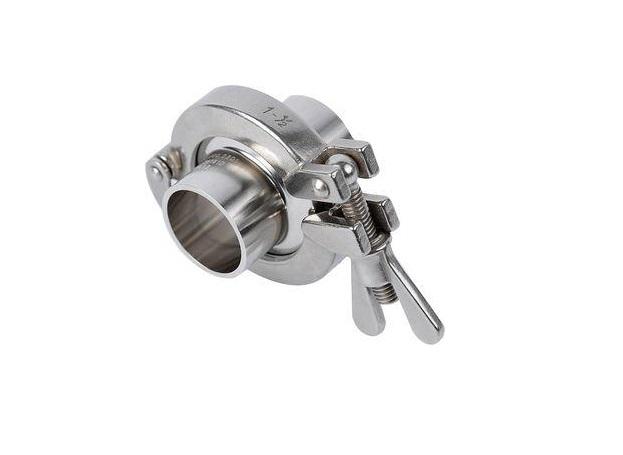
Couplings: Quick connection and disconnection.
How does a hose fitting work?
A hose fitting works by using a combination of insert and sleeve to create a secure connection between a hose and a pipe or another hose. This mechanism ensures that the connection is tight and can withstand high pressure and temperatures. Common applications include hydraulic systems, where hose fittings are often subjected to high pressure and constant movement. Adaptations to special environments, such as high temperatures or aggressive chemicals, may involve the use of special materials and design adjustments to ensure long service life and reliability.
Where are hose fittings used?
Hose fittings are used in a wide range of applications and industries, including food production, pharmaceutical manufacturing, chemical processes and hydraulic systems. They are crucial in systems that require flexibility and reliability. Hose fittings are essential in many process designs as they allow for easy installation and maintenance as well as resistance to vibrations and movements. For alternative fittings, visit our page on sanitary process components.
Do you need an alternative to a hose fitting?
If a standard hose fitting does not meet your needs, we also offer a wide range of other fittings and pipe connections that can be tailored to specific applications.
For more information or specific inquiries, please contact us directly through our contact form.


